Before the Act: Hawaii, 1903
The first arrivals were recruited to sugar plantations, a few thousand people, and then the door effectively closed for sixty years.
The first arrivals and the door that closed behind them
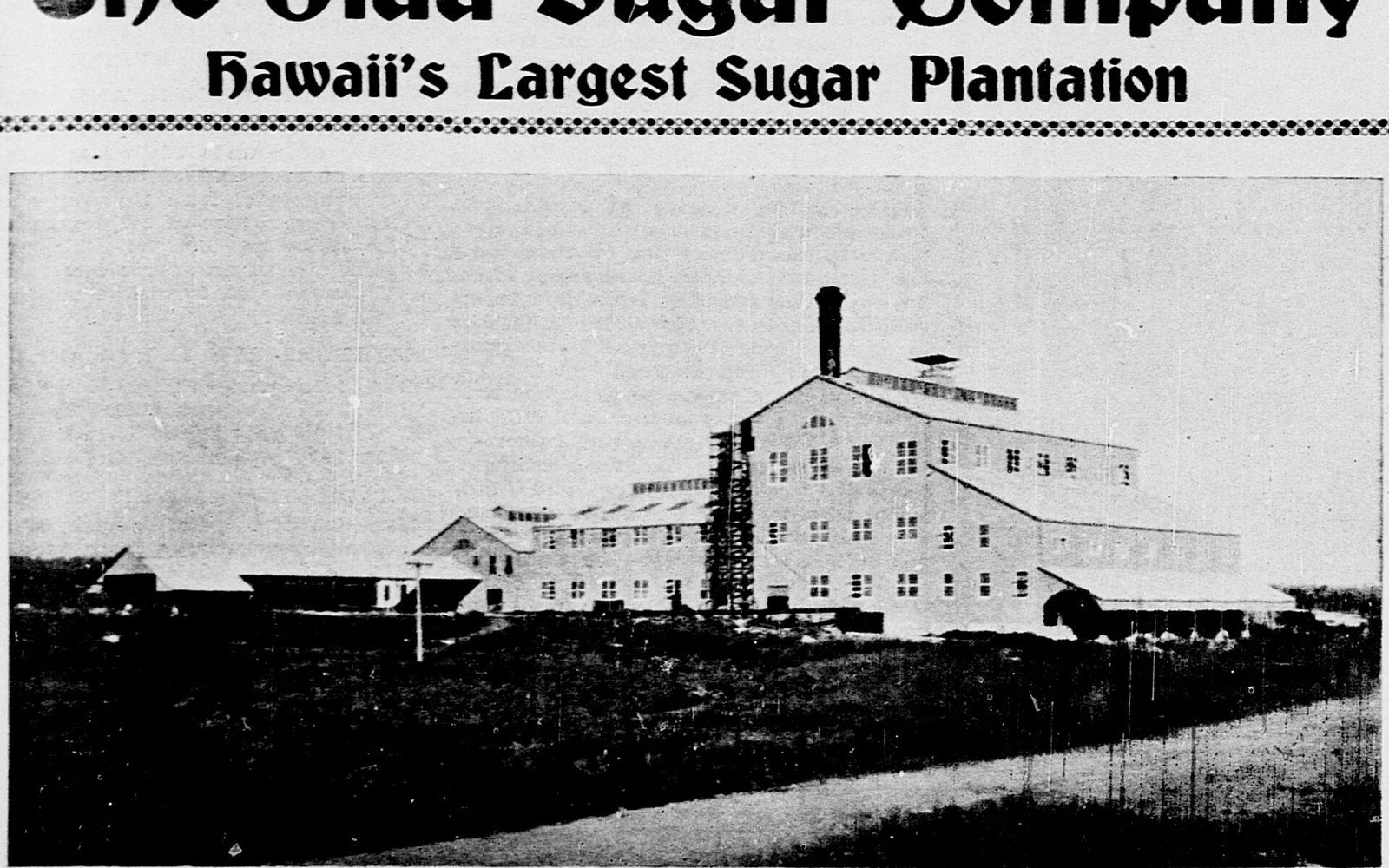
On 13 January 1903, the Gaelic docked at Honolulu harbor carrying 102 Korean workers — men, women, and a handful of children — recruited to labor on the sugar plantations of the Hawaiian Islands. They were not the first Asians to arrive in Hawaii; Chinese laborers had preceded them by decades, and a large Japanese workforce was already installed across the plantation system. But the Koreans were the first cohort of what would become, over the next two years, the founding population of the entire Korean American story. By 1905, roughly 7,400 Koreans had made the crossing. Then, effectively, the door closed — and it would not open again in any meaningful way for sixty years.
The recruitment effort was organized through the Hawaiian Sugar Planters' Association, which by the early 1900s was looking for labor alternatives to manage what it perceived as the growing wage demands and collective action of its Japanese workforce. The planters worked through an American entrepreneur named David Deshler, who established a steamship line and a quasi-banking operation to front recruits their passage money and market the venture in Korea. Deshler operated with the tacit cooperation of American diplomatic officials in Seoul and, critically, with the knowledge of King Gojong's court, which had reasons of its own to encourage emigration — partly as a way of relieving economic pressure in a peninsula increasingly squeezed by Japanese influence.
The workers who sailed were recruited mainly from port cities: Incheon above all, but also Busan and Wonsan. They were an unusually mixed cohort for labor migration of the period — not overwhelmingly rural peasants but including ex-soldiers, students, and a significant number of converts to Christianity who had been reached through Protestant mission networks. That religious composition would matter for community formation: Korean-language newspapers and mutual aid structures in Hawaii would draw heavily on church organizational models from the very beginning.
Why the migration stopped
The flow of workers stopped in 1905 for a reason that had nothing to do with American immigration law and everything to do with Japanese imperial politics. Japan's victory in the Russo-Japanese War that year left Korea effectively under Japanese control, and the Japanese government moved quickly to prohibit further Korean emigration to Hawaii. Tokyo's motive was economic and strategic: Japanese plantation workers were already unhappy about Korean laborers being used to undercut their wages, and Japan had no interest in Korea developing its own overseas diaspora outside Japanese supervision. With the Eulsa Treaty of November 1905, Japan assumed control of Korean foreign affairs, and Korean emigration to Hawaii was formally halted. The people already in Hawaii were stranded there — separated from a homeland that was no longer sovereign and unable to bring family members to follow.
Koreans, classified ambiguously as subjects of Japan for immigration purposes, were effectively ineligible.
American federal law then compounded the isolation. The Immigration Act of 1917 created an "Asiatic Barred Zone" that excluded most immigrants from across Asia, and the Immigration Act of 1924 extended the logic further, establishing national-origin quotas that allocated immigration slots in proportion to the existing national-origin makeup of the American population — a formula that awarded almost nothing to Asian nations. Koreans, classified ambiguously as subjects of Japan for immigration purposes, were effectively ineligible. The small community in Hawaii, and the even smaller community that had migrated onward to California's agricultural valleys, had to sustain itself without reinforcement.
What a sealed community built
Sealed off from new arrivals, the Hawaiian Korean community developed institutions of unusual density. Churches served simultaneously as worship spaces, political meeting halls, Korean-language schools, and social welfare offices. Political organizations proliferated — the Korean National Association, founded in 1909 with a San Francisco base and Hawaiian branches, functioned as an unofficial government-in-exile, collecting dues, issuing its own travel documents to members, and lobbying for Korean independence from Japan. These structures had no precise equivalent in the earlier Chinese or later Japanese American experience; they were shaped by the specific condition of being a diaspora from a colonized, disappearing state.
The economic life of the community followed a pattern that would recur elsewhere decades later. With plantation wages as the initial base, Koreans in Hawaii moved where they could into small commerce — laundries, restaurants, retail shops — and circulated capital through rotating credit associations, or kye (계), a pooled-savings mechanism in which members contribute fixed sums to a common fund that each member draws in turn. The kye predated the Hawaiian migration; it was an established institution in Korea. But it proved especially useful in a community that no American bank regarded as a creditworthy clientele, and it would later be carried by the post-1965 wave to Los Angeles, Flushing, and every other commercial district Korean Americans built.

The U.S. Census Bureau's records on Korean-born residents from the early twentieth century count a population in the low thousands for the entire continental United States, with Hawaii enumerated separately as a territory until 1959. The numbers stayed flat for decades. Korean American history between 1905 and 1965 is in large part the history of a community trying to hold together without replenishment — maintaining language schools, publishing newspapers, sending remittances and political support to resistance movements on the peninsula — while the American legal architecture made clear that it had no intention of letting anyone else in.
The line from 1903 to 1965
When the Immigration and Nationality Act of 1965 finally dismantled the national-origin quota system, the Korean American population was tiny by any measure — perhaps 25,000 people across the entire country, concentrated in Hawaii and California. What the Act opened was not a continuation of the 1903 migration but something qualitatively new: a mass movement of a different Korean population, educated, urban, and displaced by the disruptions of the Korean War and its aftermath. The connection to the plantation era is real but slender. The institutions — the church, the kye, the community press — crossed the gap and were available to newcomers who arrived knowing almost nothing of the earlier settlers. The Hawaiian arrivals of 1903 to 1905 are the founding episode: small in number, long isolated, and consequential not because they established a continuous chain but because they proved the institutions that the post-1965 wave would pick up and use.
1965
Read next