What Changed in Two Decades
The growth is legible in census tables before it is legible on any street.
Two censuses, one transformation
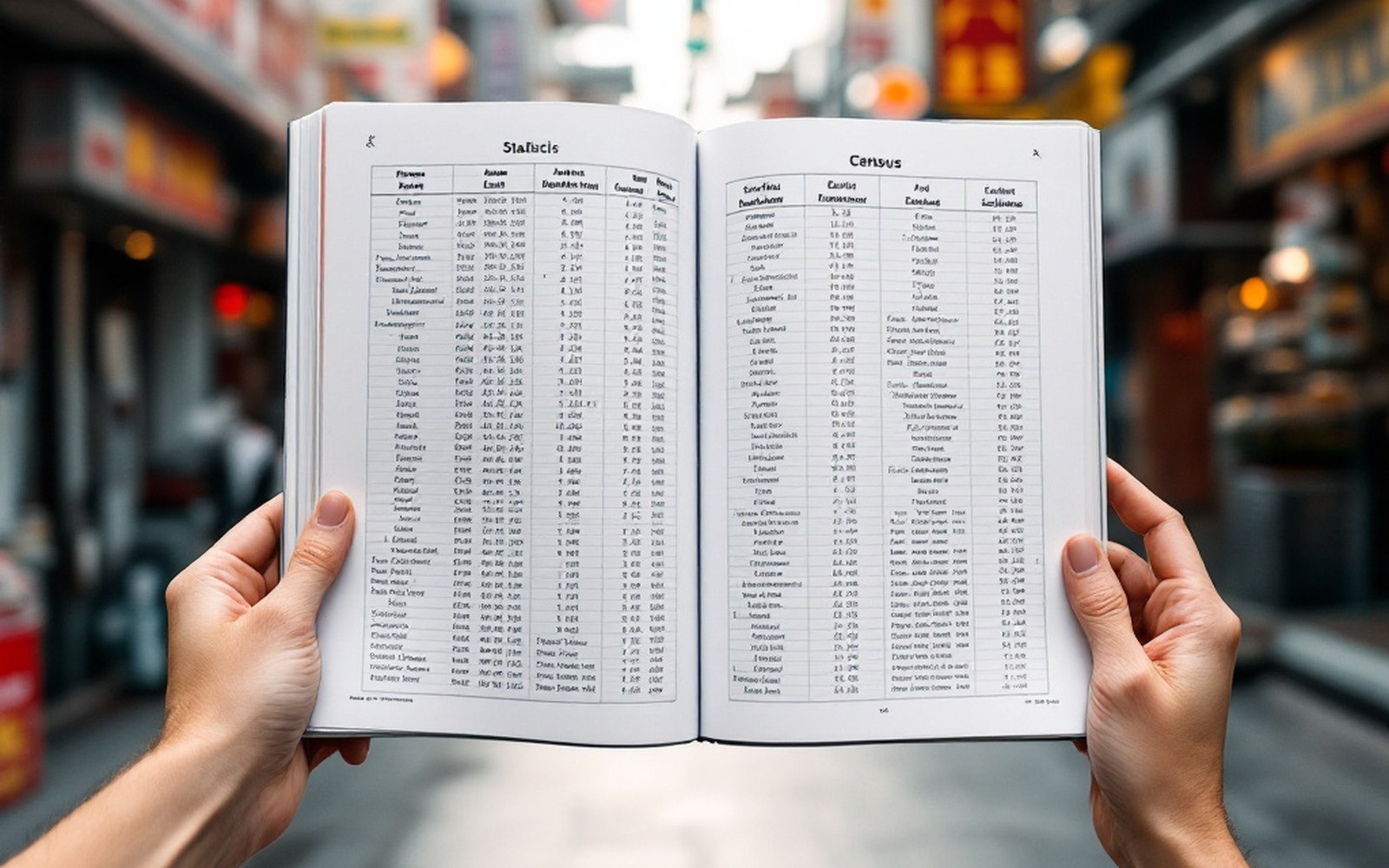
The 1970 census recorded roughly 70,000 people of Korean origin in the United States. By 1990, the figure had reached roughly 800,000. No other national-origin group grew at that rate across the same interval, and the growth was almost entirely a function of a single piece of legislation: the Immigration and Nationality Act of 1965, which dismantled the national-origin quota system that had effectively barred Koreans for four decades.
The numbers moved in stages. The years immediately after 1965 brought professionals — physicians, nurses, engineers — recruited under the Act's occupational preferences. The family-reunification provisions then operated as a multiplier: each naturalized citizen could petition for immediate relatives, who could in turn petition for theirs. Chain migration of this kind meant the rate of arrival accelerated rather than flattened through the 1970s and into the 1980s. The 1980 census counted roughly 357,000 Korean Americans; by 1990 the figure was around 799,000, more than a doubling in ten years.
The spatial consequence was the Koreatown. Los Angeles had the largest and most bounded of these districts, with a stretch of Olympic Boulevard that functioned as a commercial spine. Flushing, Annandale, Albany Park in Chicago, and Duluth in Georgia each took a different urban form — grid, suburb, honorary street, subdivision — but all of them became legible on a map during this same twenty-year window. The storefronts and the census tables moved together.
The 1980 census counted roughly 357,000 Korean Americans; by 1990 the figure was around 799,000, more than a doubling in ten years.
What the tables could not fully show was the internal structure that made rapid commercial establishment possible. The kye — a rotating credit association in which a fixed group of members contributes a set sum each cycle, with one member taking the full pot per round — allowed entrepreneurs to capitalize a business before any conventional lender would extend credit. The institution predated immigration to the United States; it traveled with the community and underwrote a great many of the storefronts the 1990 census was, in effect, counting.
The series, plotted
1965
Read next